


High fuel prices have got everyone feeling pretty low. While you can reduce mileage as an individual to help curb costs, your fleet doesn’t have that same flexibility. They have to drive for your business to survive.
Action is being taken. In a 2026 Coast survey, 86% of 217 fleet operators are either cutting costs or actively searching for solutions to soaring fuel prices.
One action worth exploring is finding the right corporate credit card for your fleet. You’ll know it’s the right one because it will help you earn rebates on every gallon, get a grip on spend, and stop fuel fraud in its tracks.
This article lays out the best corporate cards for small businesses running fleets and what to look for when fuel is the line item keeping you up at night.
How we evaluated these 6 corporate credit cards
Not every corporate card is built to serve field crews fueling up across states. That’s why we looked at what matters for small businesses with fleets.
- Spend controls and policy enforcement: A card without per-driver limits, category restrictions, and real-time policy enforcement is a blank check with your company name on it. We prioritized cards that shut down overspending before it hits your books.
- Acceptance network: Open-loop cards work at most fuel stations nationwide. Closed-loop cards save you more, but your drivers must look for in-network stations. We evaluated both based on how small business fleets run routes.
- Rewards and rebate transparency: Tiered rebate programs look great until you realize the top rate requires thousands of gallons a month. We favored corporate business credit cards without volume-tier gimmicks.
- Integrations: Fleet operators already juggle accounting solutions, telematics dashboards, and GPS platforms. A card that doesn’t plug into that stack creates another headache. We looked for cards that push data where it needs to go.
- Fit for small and growing businesses: Most corporate cards are built for companies with enterprise-level revenue and large teams. We filtered for cards that don’t slam the door on a five-truck operation still building its credit history.
- Pricing clarity: Hidden per-card fees and transaction minimums didn’t inspire confidence. If we couldn’t figure out what a card actually costs in under five minutes, it didn’t make the cut.
We started with a long list of 15 best corporate credit cards for small businesses. Most didn’t survive the criteria above. These six did, and each earned its spot for a different reason.
The 6 best corporate credit cards for small businesses
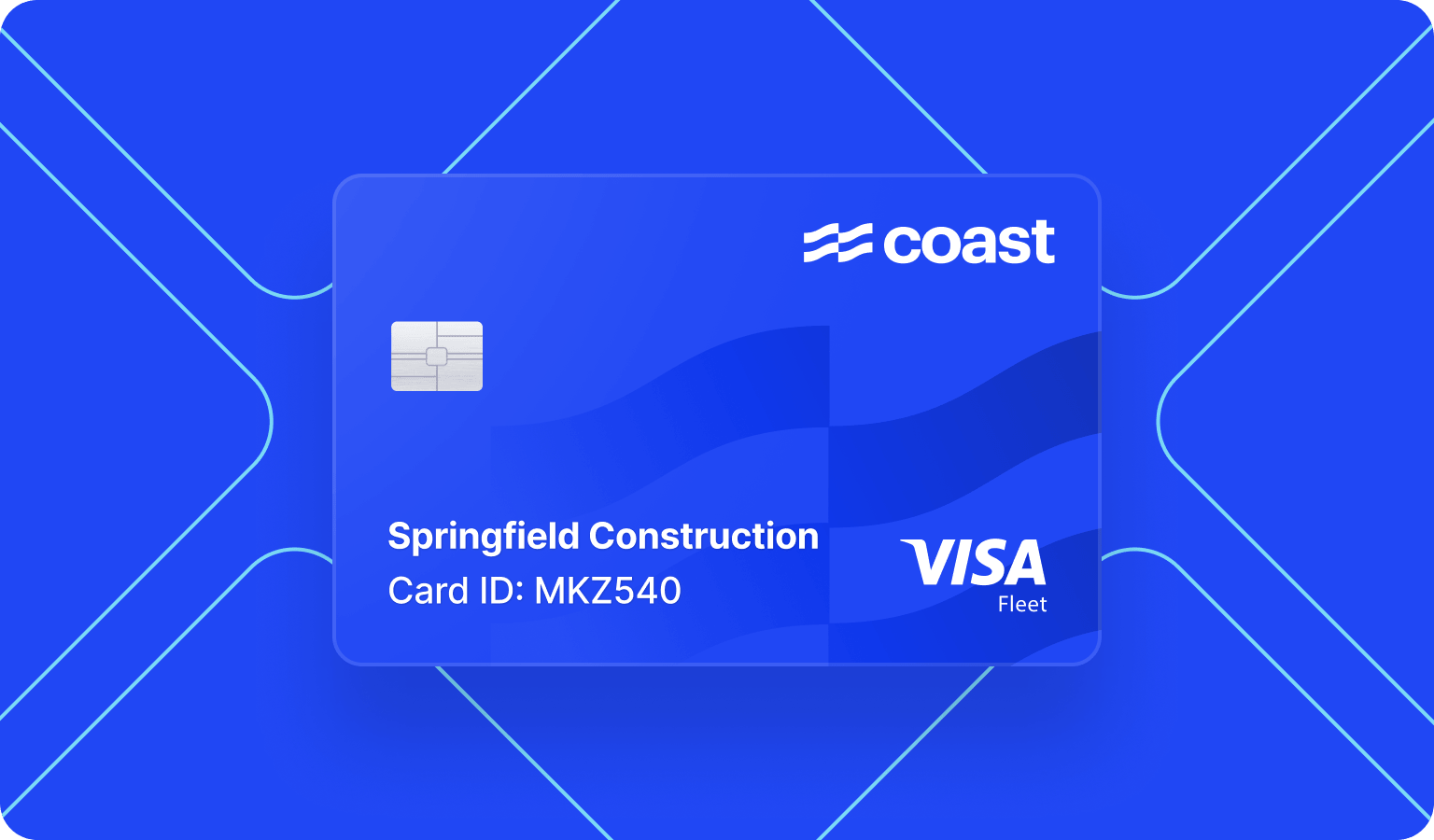
1. Coast: Best for corporate card for small businesses operating fleets
Coast works well for businesses operating fleets that want real control over fuel spend without sacrificing flexibility. Your drivers can use Coast anywhere Visa is accepted, and every gallon earns you 3-9¢ back at 30,000+ stations*, with no volume tiers or expiry dates.
Beyond fuel, you can use Coast for maintenance, parts, tolls, and material purchases. Plus, transactions hit your dashboard instantly with full line-item detail, so you always know who fueled, where, when, and at what cost.
You can also create unlimited spend policies with category blocks, custom limits, and rules by driver, vehicle, or day of week. Larger purchases can require receipts, memos, or job codes. All of this adds up to fewer surprises on your statement, tighter compliance across the board, and a clearer picture of where your money’s going.
Thanks to Coast’s integration with telematics systems such as Samsara, Geotab, Verizon Connect, and GPS Insight, you can easily pull odometer data and match it with fuel transactions to track miles per gallon. On the accounting side, it integrates directly with tools such as QuickBooks, NetSuite, and Fleetio.
Coast’s mobile card unlock ties each transaction to a person, so you know exactly who’s spending. And if fraud does slip through, Coast backs you with a $25,000 annual fuel fraud guarantee covering both external and employee fraud when you use our advanced security features (eligibility and terms apply).
Coast charges a flat $4 per active user per month.
- Earn 3–9¢ back per gallon at 30,000+ stations*, with rebates on every gallon
- Works anywhere Visa is accepted
- Granular spend controls (category blocks, driver/vehicle rules, time-of-day limits) with real-time transaction visibility
- Plugs directly into telematics, fleet management, and accounting platforms
- Mobile card unlock prevents PIN sharing and theft
- Doubles as a controlled corporate card at no extra cost
- $25,000 annual fuel fraud guarantee when you use Coast’s advanced security features (eligibility and terms apply)
- No prepaid card option available
- Fleets with fewer than 5 vehicles may not get the full benefit of Coast
- Best suited for fleet operating local businesses
2. Brex: Best for startups and tech-forward teams
Brex is a corporate card and spend management platform with a strong foothold among startups, used by 1 in 3 venture-backed U.S. startups. It runs on the Mastercard network and lets businesses issue local-currency cards in 50+ countries.
The platform’s rewards lean toward categories common for startups and tech-forward teams. You earn up to 7x points on rideshare, 2x on software, 4x on flights and prepaid hotels booked through Brex Travel, 3x on restaurants, and 1x on everything else. You can redeem points for cash back, statement credits, or even billboard advertising.
There’s no personal guarantee required, and Brex determines your credit limit based on your account type and business financials.
On the controls side, you can set spend limits by merchant, category, and more, and Brex lets you track expenses in real time.
Brex can also automatically gather itemized, IRS-compliant receipts from major merchants and fill in memos based on the purpose of the spend, reducing the manual work that comes after each purchase.
Brex offers a free plan to get started, with more advanced features available on its Premium plan for $12 per user per month.
- No personal guarantee required, so founders don't have to put their personal credit or assets behind the card.
- Strong rewards on software and business travel
- Local-currency cards available in 50+ countries
- Not purpose-built for fleet fuel management
- Low rewards on fuel, which earns the base 1x rate compared with higher rewards on travel, dining, and software
- No support for sole proprietors or unincorporated partnerships, since Brex requires a formally organized business entity
3. Ramp: Best for Automated Expense Managemen
Ramp is a Visa corporate card and spend management platform that helps small businesses cut down on the manual work that comes with managing company spend.
You can issue unlimited physical and virtual cards and set spending limits and merchant restrictions to keep purchases within company policy. Ramp then automatically matches receipts, codes transactions, and syncs everything with your accounting software for easier reconciliation.
Rewards-wise, Ramp offers flat-rate cashback on every purchase. And because there’s no annual fee, late fees, or foreign transaction fees, rewards are easier to track month to month.
Ramp also doesn’t require a personal guarantee. Instead, it considers your company’s financial health, including its cash balance, cash flow, and revenue, when setting your business limit.
Beyond day-to-day expense management, the platform analyzes transactions for savings opportunities, flagging things like duplicate spend, overspending, and unused subscriptions.
Ramp is free to get started, with Ramp Plus available for $15 per user per month for teams that need more advanced features.
- No personal guarantee required
- No annual, late, or foreign transaction fees
- Automatic savings insights that flag duplicate spend, overspending, and unused subscriptions
- Not purpose-built for fleet fuel management
- NetSuite and Sage Intacct integrations require Ramp Plus
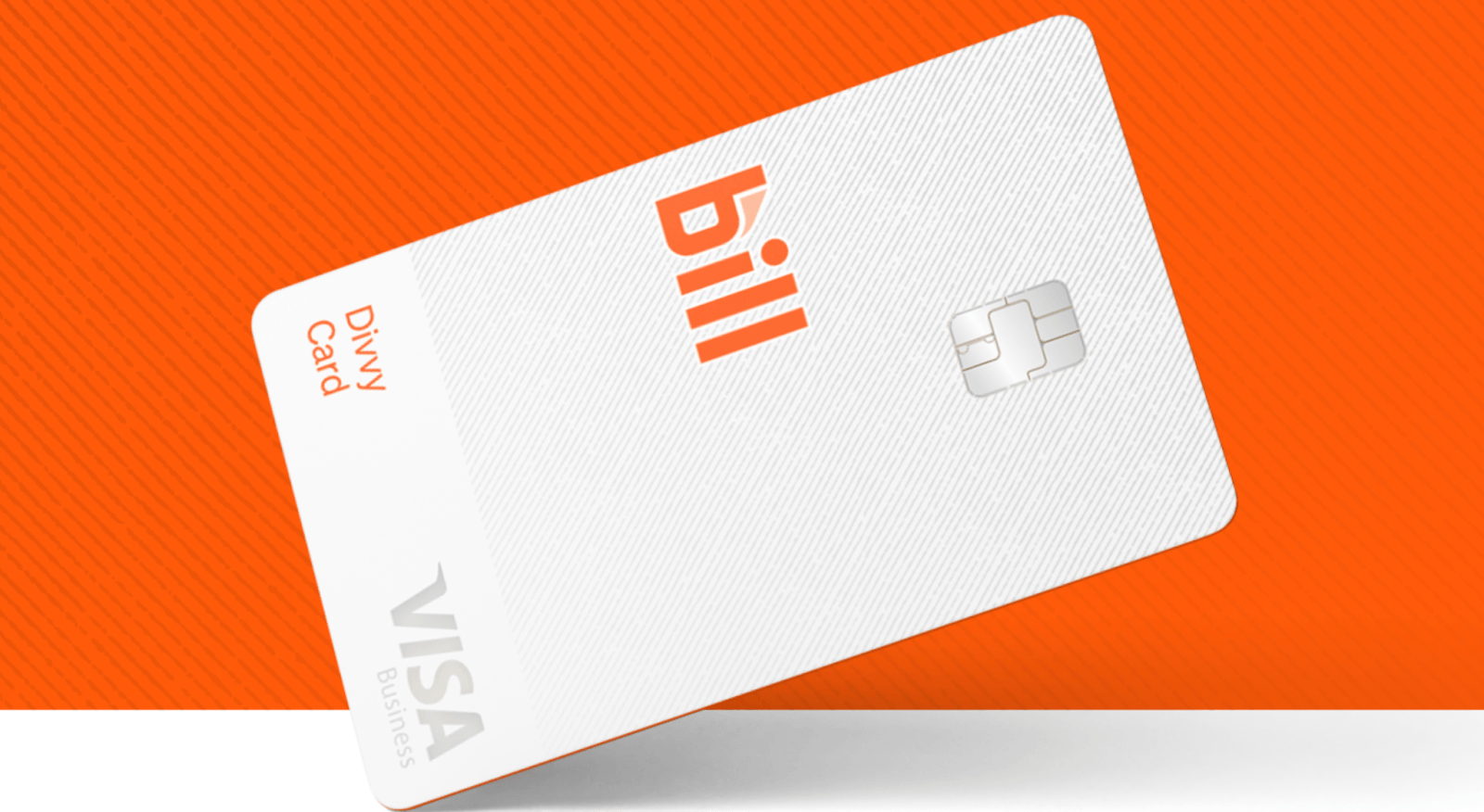
4. Divvy (BILL Spend & Expense): Best for budget control
The Divvy card is a corporate charge card that’s part of BILL Spend & Expense, an AI-powered expense management platform.
It’s built around a budget-first model, where admins can set budgets for individuals, teams, or projects. When an employee swipes their card, funds are instantly deducted from that specific budget.
You can issue cards instantly and use mobile controls to freeze cards, adjust limits, or let employees request additional funds.
On the expense side, transactions appear in BILL in real time, where they’re automatically categorized and coded before syncing to your accounting software for reconciliation. The platform automatically syncs with QuickBooks, Oracle NetSuite, Xero, and Sage Intacct.
The card has no annual fees and no interest charges. You get three funding options: a fixed line set at application based on your financials, a variable line that scales with your cash flow, revenue, and spending, or a pre-fund option where you provide funds upfront. All three are rewards eligible, and applying online doesn’t impact your credit.
Rewards are performance-based. The more frequently you pay off your balance, the more points you earn. With a weekly payment schedule, you can earn up to 7x points on restaurants, 5x on hotels, 2x on recurring software subscriptions, and 1.5x on everything else.
As for pricing, BILL Spend & Expense is free to use, with no subscription or per-user software fees.
- Free to use
- Budget limits help prevent employees from overspending
- Works well for project-based or departmental spend
- Not purpose-built for fleet fuel management
- Higher reward rates depend on payment frequency
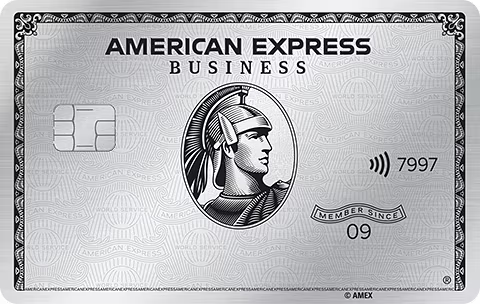
5. American Express Business Gold: Best for travel and rewards maximizers
The American Express Business Gold Card is a strong option for businesses that spend heavily in categories like advertising, software, dining, gas, transit, and wireless services.
The card automatically earns 4x points on the two eligible categories where your business spends the most each billing cycle. You also earn 3x points on flights and prepaid hotels booked through AmexTravel.com and 1x on other eligible purchases.
The card has a $375 annual fee, but several statement credits can help offset the cost. These include up to $240 annually on eligible U.S. purchases at Grubhub and office supply stores, with FedEx eligible through October 1, 2026; up to $300 annually on ChatGPT Business; up to $150 annually on Squarespace; and a monthly credit toward Walmart+ membership. Enrollment is required for several of these benefits.
American Express also gives you the option to pay your card balance in full each month or pay eligible purchases off over time with interest.
The platform offers expense management tools for its Business Cards, including employee spending controls and a QuickBooks connection for syncing card transactions and receipts.
- Earn 4X on your top two eligible spending categories each billing cycle
- Travel perks including 3X points on AmexTravel.com, no foreign transaction fees, trip delay insurance, and baggage insurance
- Flexible payment options, with the choice to pay in full or carry eligible purchases over time
- Not purpose-built for fleet fuel management
- The annual fee of $375 may be hard to justify for small businesses
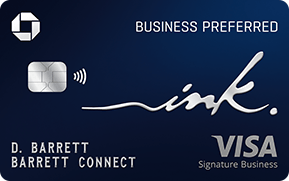
6. Chase Ink Business Preferred: Best for everyday business spend
The Chase Ink Business Preferred is a business credit card that rewards several common business expenses, including shipping, social media and search engine advertising, internet, cable and phone services, and travel.
You earn 3X points on the first $150,000 spent across these categories each account anniversary year, then 1X. All other purchases also earn 1X with no earning limit. New cardmembers can currently earn 100,000 bonus points after spending $8,000 in the first three months.
The card also comes with travel and purchase protections, including trip cancellation and interruption insurance, primary auto rental coverage for business rentals, purchase protection, extended warranty coverage, and cell phone protection.
Points don’t expire while your account is open, and you can transfer them to participating airline and hotel loyalty programs.
Chase also offers employee cards at no additional cost, with individual spending limits and purchase tracking.
The card has a $95 annual fee and no foreign transaction fees.
- 3X points on common business expenses like travel, shipping, advertising, and phone services
- 100,000-point welcome bonus after spending $8,000 in the first three months
- Built-in travel, purchase, and cell phone protections
- Not purpose-built for fleet fuel management
- Annual fee applies
How to choose the right corporate credit card for your small business
Finding the best corporate credit card for a small business is never about chasing the flashiest rewards. Instead, you must think about matching the card to how your team actually spends. Here’s what to weigh before you sign up.
- Spend mix: Look at the last three months of expenses and group them by office, field, or mixed. A card optimized for office software and travel won’t serve a team that fills up trucks five days a week, and vice versa.
- Spend controls: Ask whether you can set rules by employee, category, merchant, and time of day. If you have field workers or contractors, granular limits are non-negotiable: a small business charge card that locks down at 6 PM prevents a lot of headaches.
- Network acceptance: Open-loop cards on the Visa or Mastercard work almost everywhere, whereas closed-loop cards only work at a specific network of merchants. Closed-loop options sometimes offer better per-gallon or per-category rebates, but you’re trading flexibility for that discount. If your team operates across regions or buys outside one network, open-loop usually wins.
- Rewards and rebates: Check whether the headline rate is achievable at your actual spend volume. Many corporate credit card programs use tiered structures where the top rebate only kicks in past thresholds that most small businesses never hit. Run the math on your real numbers.
- Integrations: The card should sync transactions directly into your accounting software, and, for fleet-heavy operations, your telematics platform. If someone on your team is exporting CSVs every month and reconciling manually, you’re paying the cost of poor integration in labor hours.
- Pricing transparency: Read past the “no annual fee” headline for transaction fees, out-of-network surcharges, foreign transaction fees, and per-card monthly charges. Some providers bury enough small fees that the total cost outruns a card with a clean annual fee.
- Fraud protection: Security measures like EMV chips, driver IDs at the pump, real-time transaction alerts, and a clear fraud liability guarantee should all be standard. For field operations, driver ID prompts at the point of sale are especially important. They tie each swipe to a person. If a provider can’t explain their fraud guarantee in one sentence, treat that as a signal.
The best corporate card for your small business is the one that matches your spend pattern, plugs into your existing tools, and gives you visibility without micromanagement. Start with how your team actually operates today and then pick the card that fits.
Why Coast is the best corporate card for businesses running a fleet
Most cards on this list of corporate credit cards were built for office-first spending and adapted for the field. Coast was built from the ground up for businesses where fuel, vehicles, and job sites are where the money actually moves, then extended to cover back-office expenses on the same platform. Here’s why it stands apart for fleet operators:
- Visa acceptance: Coast runs on Visa, meaning drivers can fuel and buy supplies anywhere Visa is accepted, instead of routing to a limited station list.
- Fraud protection: Cards are locked by default, controls can be set by driver and vehicle, and telematics integrations with Samsara, Geotab, Verizon Connect, and Azuga cross-check transactions against GPS and fuel tank data. The fuel fraud guarantee covers up to $25,000 a year when advanced security features are in use (eligibility and terms apply).
- Flat pricing: Coast charges you $4 per active user per month. Small fleets aren’t penalized for not being enterprise-sized.
Start your application today and see if Coast is the right fit for your fleet.